
Criminal Court Cases in Lipscomb County
Lipscomb County criminal court cases split by charge level. The 31st Judicial District Court hears felonies. The constitutional Lipscomb County Court handles its misdemeanor jurisdiction, including Class A and Class B cases. The countywide Justice of the Peace and the Booker and Follett municipal courts hear fine-only matters within their authority. Each lower court keeps its own docket, so a district or county clerk check can miss a municipal citation, failure-to-appear entry, or related capias.
The combined District and County Clerk is the file custodian for district and county prosecutions. Its criminal files can contain the charging instrument, settings, motions, orders, plea or trial result, judgment, sentence, costs, and disposition. Searchers should identify the likely court before ordering. A booking charge may change after prosecutor review, and the court file is the better source for the charge that was actually filed.
The district administration is based in Wheeler because the 31st Judicial District serves more than one county. The filed Lipscomb case still belongs with the combined local clerk.
Pick the Lipscomb Criminal Court
The official Texas Judicial Directory helps verify local court contacts. Its county view covers the district, county, justice, Booker, and Follett courts. The directory has displayed the county judge as Dori Artis, while Lipscomb County's current official list uses Dori Roots. Use the county's current name, but confirm details at the office when records conflict.
The directory interface is shown in the assigned court image. It is a contact-finding tool, not a database of Lipscomb County criminal case records.
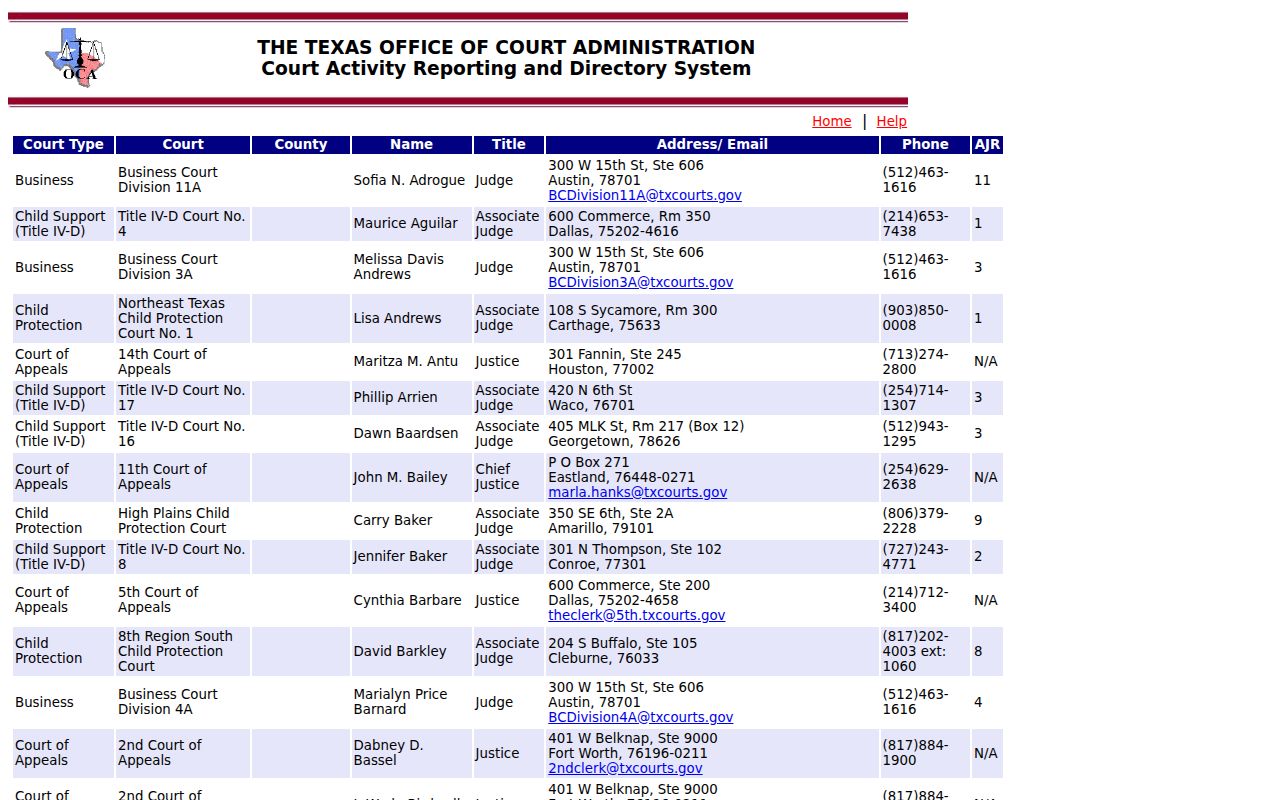
That distinction prevents a common dead end: a court listing tells you whom to ask, but it does not display a defendant's docket or case documents.
| Court | Criminal role | Contact |
|---|---|---|
| 31st District Court | Felony proceedings | 806-826-5501 |
| Lipscomb County Court | County misdemeanor jurisdiction | 806-862-4131 |
| Countywide Justice Court | Fine-only and JP matters | 806-862-3844 |
| Booker Municipal Court | Booker ordinance and fine-only matters | 806-658-4579 |
| Follett Municipal Court | Follett ordinance and fine-only matters | 806-653-3411 |
Lipscomb County Case Record Searches
No official Lipscomb County online criminal docket was found. The clerk's “Official Public Records” link is for land records, and its payment service is not a case lookup. Use a direct request for county and district criminal court cases, including older files that may not be digitized. Give enough detail to distinguish the person and proceeding without sending needless sensitive data.
- Choose the court level from the alleged charge: district for a felony, county for a Class A or B misdemeanor, or the proper justice or municipal court for a fine-only case.
- Contact the combined clerk by phone, email, mail, or at the counter. Give the defendant's name, aliases, approximate filing or offense date, and case number if known.
- Name the court and charge when possible. Ask whether staff can schedule inspection and whether any older record must be retrieved.
- Request the exact docket, charging instrument, judgment, sentence, or other document needed. State whether a plain or certified copy will serve.
- Ask for the search, copy, certification, delivery, and payment terms before ordering because Lipscomb County has not published those amounts.
The Lipscomb County District Clerk page publishes its contact route, local rules, appointment reports, and a 2026 case schedule. That schedule helps with court dates but is not a name-searchable docket.

The page is the most direct online starting point for clerk contact and current court materials.
re:SearchTX and Lipscomb Criminal Cases
re:SearchTX is a statewide service for e-filed court documents, but it is not a comprehensive Texas criminal case search. The Texas Judicial Council reported that its document collection dating from 2016 excluded criminal case records. A blank search therefore cannot clear a person or prove that no Lipscomb County case exists. Confirm any apparent result with the clerk who holds the original file.
| Field label | Type | Required | Notes |
|---|---|---|---|
| Person or business | Text | One criterion | Coverage depends on contributing courts. |
| Case number | Text | Alternative | Best exact locator when known. |
| Court or location | Filter | No | Narrow by county or court if available. |
| Case type or date | Filter | No | Options vary with available records. |
| Registration | Account | May be | Document access and charges may vary. |
Note: Treat re:SearchTX as a possible document layer, never as proof that Lipscomb County has no criminal case.
What a Criminal Case File Contains
A Lipscomb County criminal case file follows the prosecution, not just the arrest. It shows which accusation reached court, how the case moved, and what result the judge entered. The county has no public sample case online, so the fields below describe standard file components documented by the research, not promised columns in a local portal.
| Case Number and Court | Identifies the proceeding and the court responsible for it. |
|---|---|
| Charging Document | Shows the filed complaint, information, or indictment and the stated offense. |
| Docket Entries | Lists filed events, settings, motions, orders, and other case activity. |
| Hearing Dates | Records scheduled or completed arraignments, pretrial matters, trial, and sentencing. |
| Disposition and Judgment | States whether a charge was dismissed, acquitted, deferred, or ended in conviction. |
| Sentence and Conditions | Shows punishment, community supervision, costs, and court-ordered terms when entered. |
The court file can also resolve gaps in the Texas DPS public product. DPS compiles reported public outcomes by identity and arrest cycle, while a clerk file retains the actual documents and docket history for one case.
Read Lipscomb Criminal Case Outcomes
Outcome words carry precise meanings. They also prevent an arrest charge from being mistaken for a final court result. Read the disposition with the charging instrument, offense grade, judgment, and sentence rather than relying on one short docket code.
- Dismissed
- The charge ended without conviction on that count, though the earlier arrest record does not automatically vanish.
- No-billed
- The grand jury declined to return an indictment on the presented felony accusation.
- Deferred adjudication
- The court withheld a conventional final adjudication while imposing community supervision, subject to Texas law.
- Acquitted
- A judge or jury entered a not-guilty result after trial.
- Convicted
- The court entered a judgment of guilt; read it with the offense degree and sentence.
Ask the Lipscomb County clerk to explain local shorthand when an abbreviation is unclear. Staff can identify the record, though they cannot give legal advice about its effect.
Criminal Case Stages in Lipscomb County
A Lipscomb County criminal case starts before the clerk file is complete. An officer makes an arrest or submits allegations, and a magistrate addresses warnings, probable cause, and release. The prosecutor then decides whether and what to file. A felony may proceed through grand-jury review; an eligible misdemeanor may use an information. The accused is arraigned, pretrial discovery and motions follow, and the case ends through dismissal, plea, or trial before any sentence and later appeal work.
Case flow: Charges Filed › Arraignment › Pretrial › Plea or Trial › Disposition › Sentencing
Texas Code of Criminal Procedure Article 15.17 generally calls for taking an arrested person before a magistrate without needless delay and no later than 48 hours. That event is part of early processing and does not itself establish guilt.
Lipscomb Criminal Cases in a Restored Courtroom
Lipscomb County's district courtroom sits within a courthouse built chiefly in 1916 and finished in 1917. A major restoration led to a 2021 rededication. The work restored the district courtroom and balcony while updating wiring, mechanical systems, and access through an interior elevator. This history matters to a records visitor because the court and clerk work in a rural historic building, not a large justice complex. The official Lipscomb County homepage provides the courthouse identity and main office contacts.
Official pages list the courthouse at 105 Oak Street and the combined clerk at 101 South Main. Call before traveling to confirm the correct entrance and records counter. The clerk is open 8:30 a.m. to 5 p.m. and closes from noon to 1 p.m.; long travel and spotty cell service make advance contact useful.
Access Rules for Case Records
Court access does not always follow the same path as a sheriff's administrative record request. Texas judicial-access rules govern court records, while the Texas Public Information Act chiefly applies to executive-branch government records. Ask the clerk for the filed case and the sheriff for its own incident or booking material. If some content is protected, request the releasable parts.
Juvenile files, sealed or expunged matters, protected victim data, account numbers, Social Security numbers, and some active-investigation material can be closed or redacted. A clerk is not required to create a new report or answer research questions. Give a precise request for an existing docket or document, and ask for the legal basis if access is denied.
The official Texas court rules and standards provide the statewide access framework.
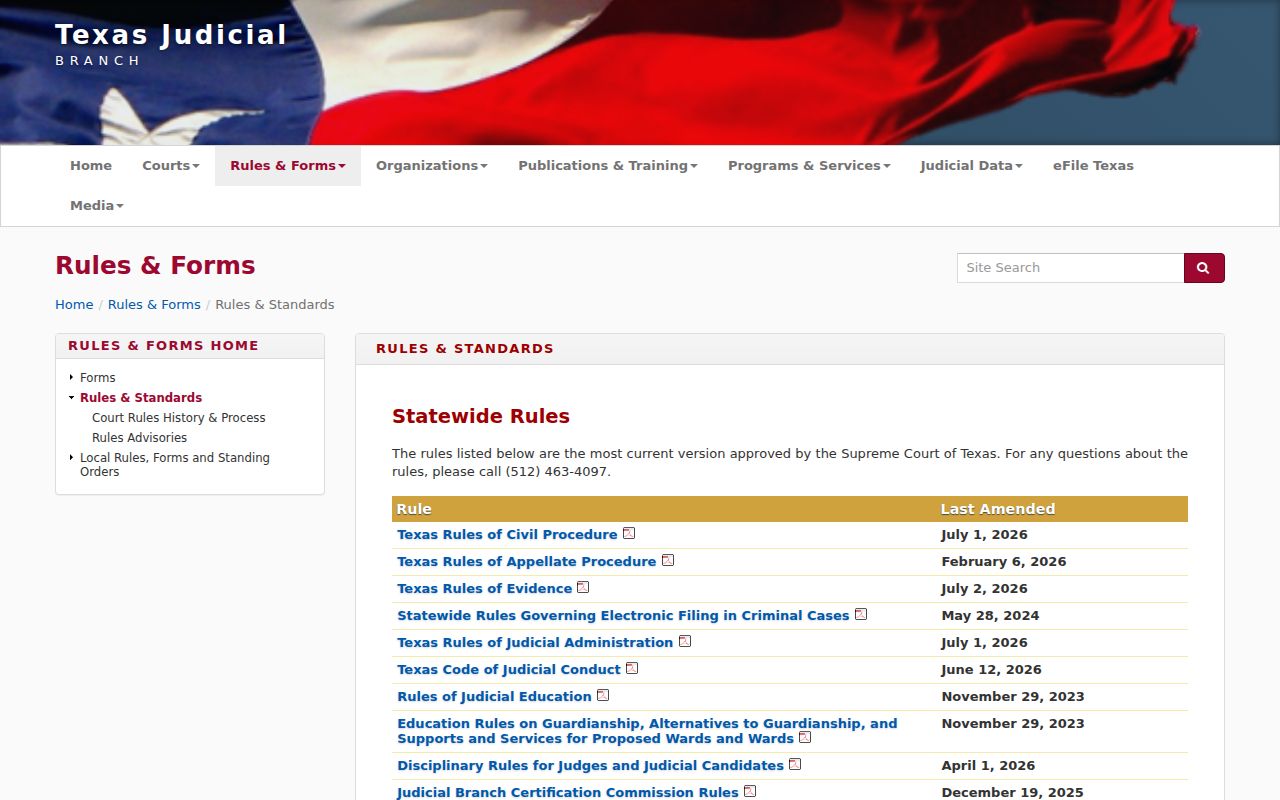
Those rules are the right reference when a judicial record does not fit an ordinary county public-information request.
Federal Cases Beyond Lipscomb Courts
A federal prosecution is outside the Lipscomb County clerk's file. The county lies in the Northern District of Texas, Amarillo Division. PACER is the official federal account-based source for dockets and filed documents. It does not replace the local clerk for state felony, misdemeanor, justice, or municipal records.
The assigned PACER image shows the separate federal access channel.
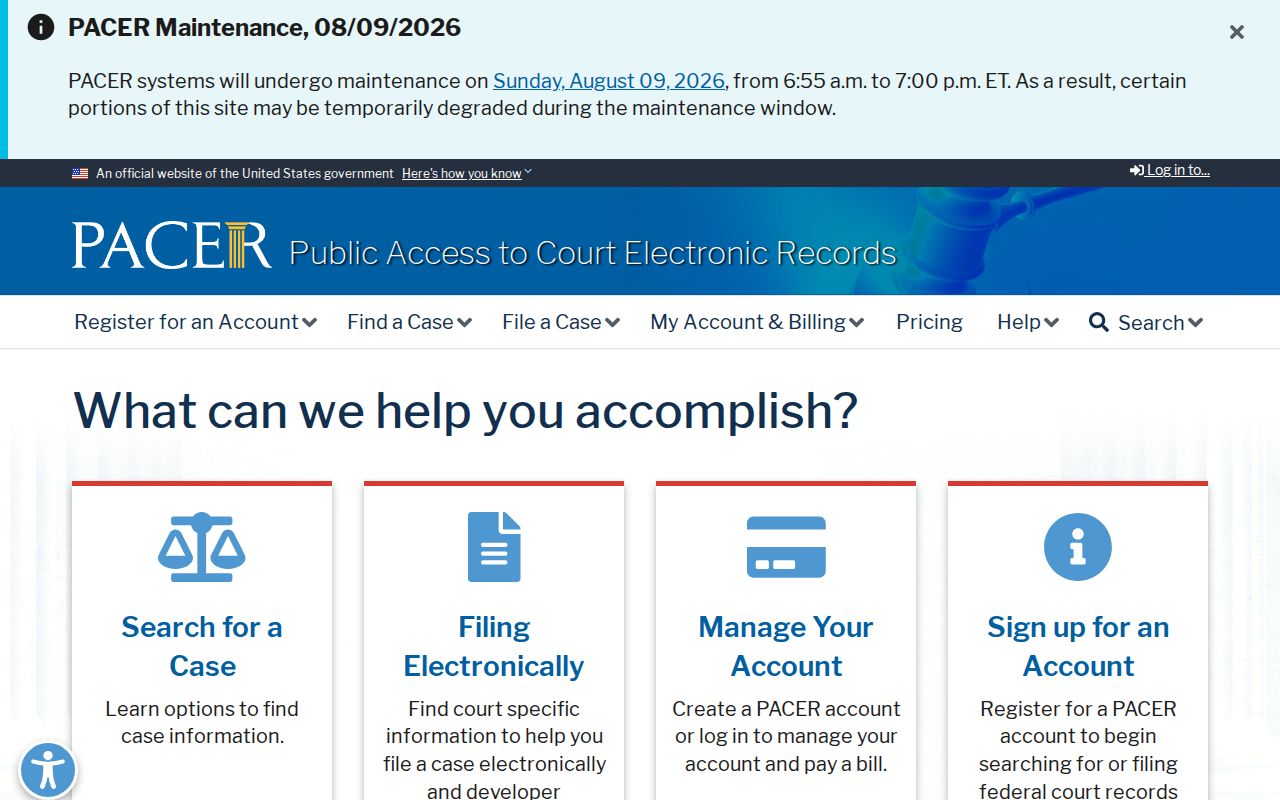
Use the court name and case number when known, and verify current PACER charges before opening many documents.